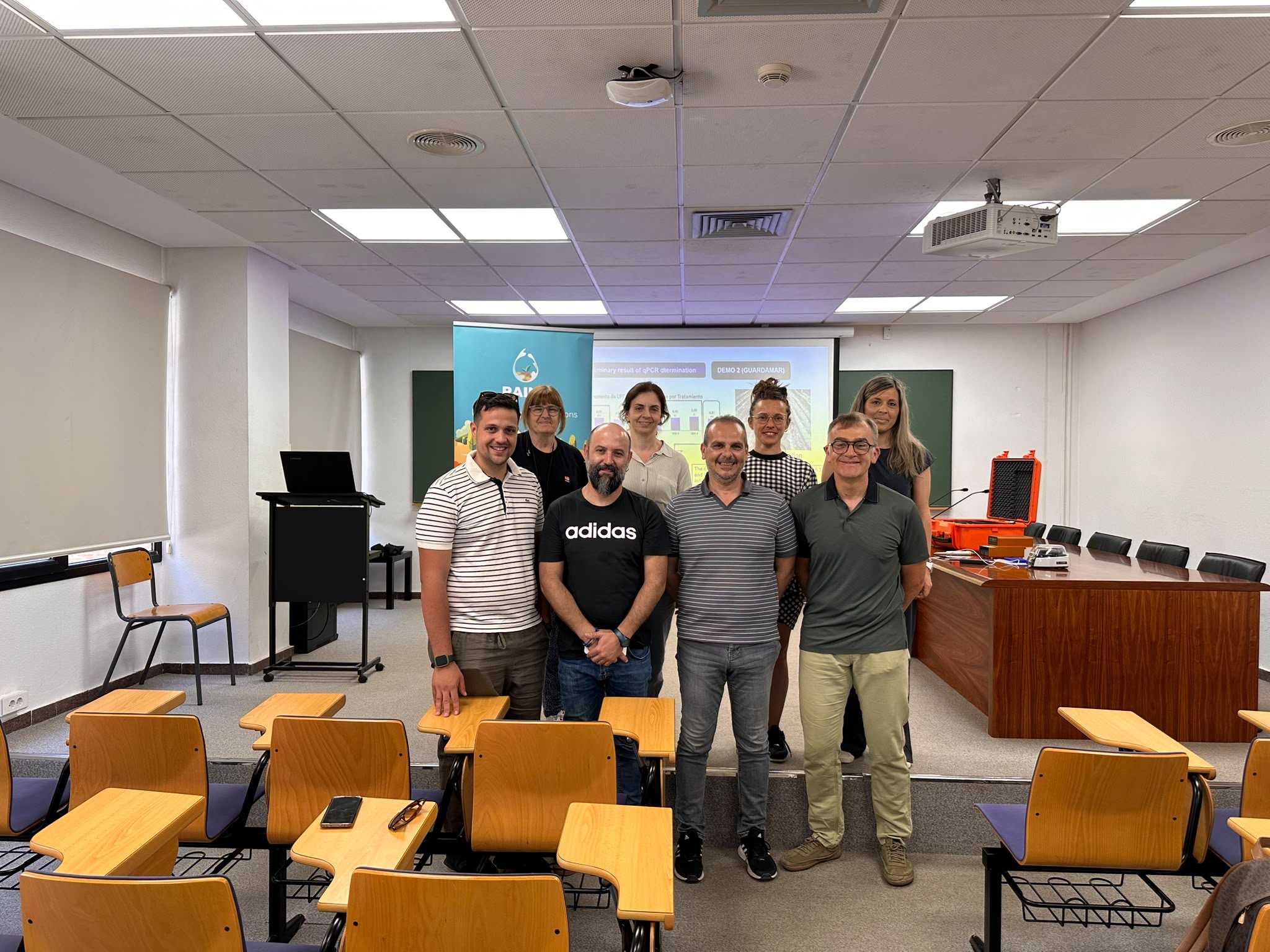
As part of the RAINS project, a delegation from the Hellenic Agricultural Organisation (ELGO) (Vasileios Takavakoglou, Marios Tzimas and Eleanna Pana) travelled to Spain for a technical visit to the project’s south-eastern demonstration sites.
The visit completed the reciprocal exchange that began earlier, when the Spanish partners toured the Greek research area. This time, it was the Greek team’s turn to observe how the same suite of nature-based and smart solutions is being deployed under Spanish conditions, helping ensure that both demonstration networks progress in parallel using shared protocols and a common scientific approach.
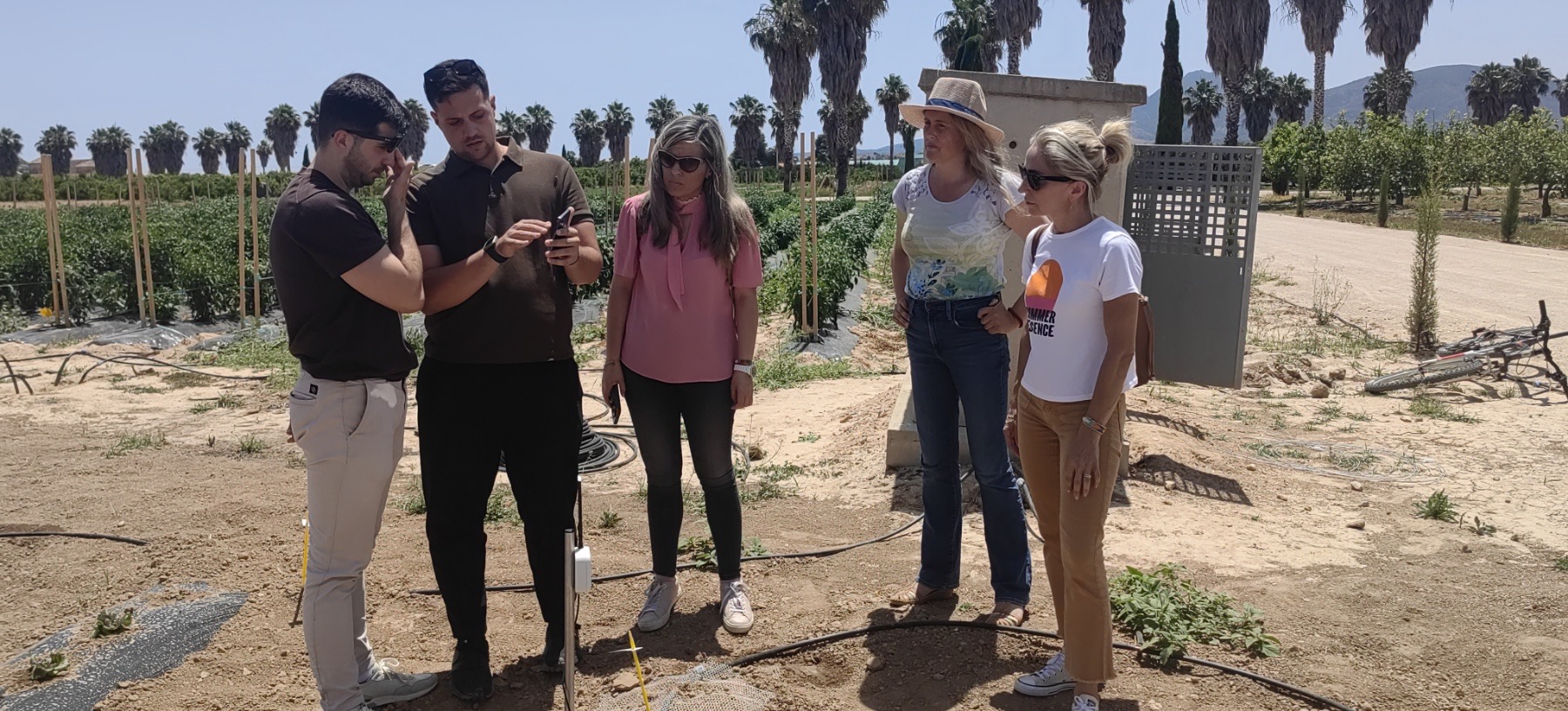
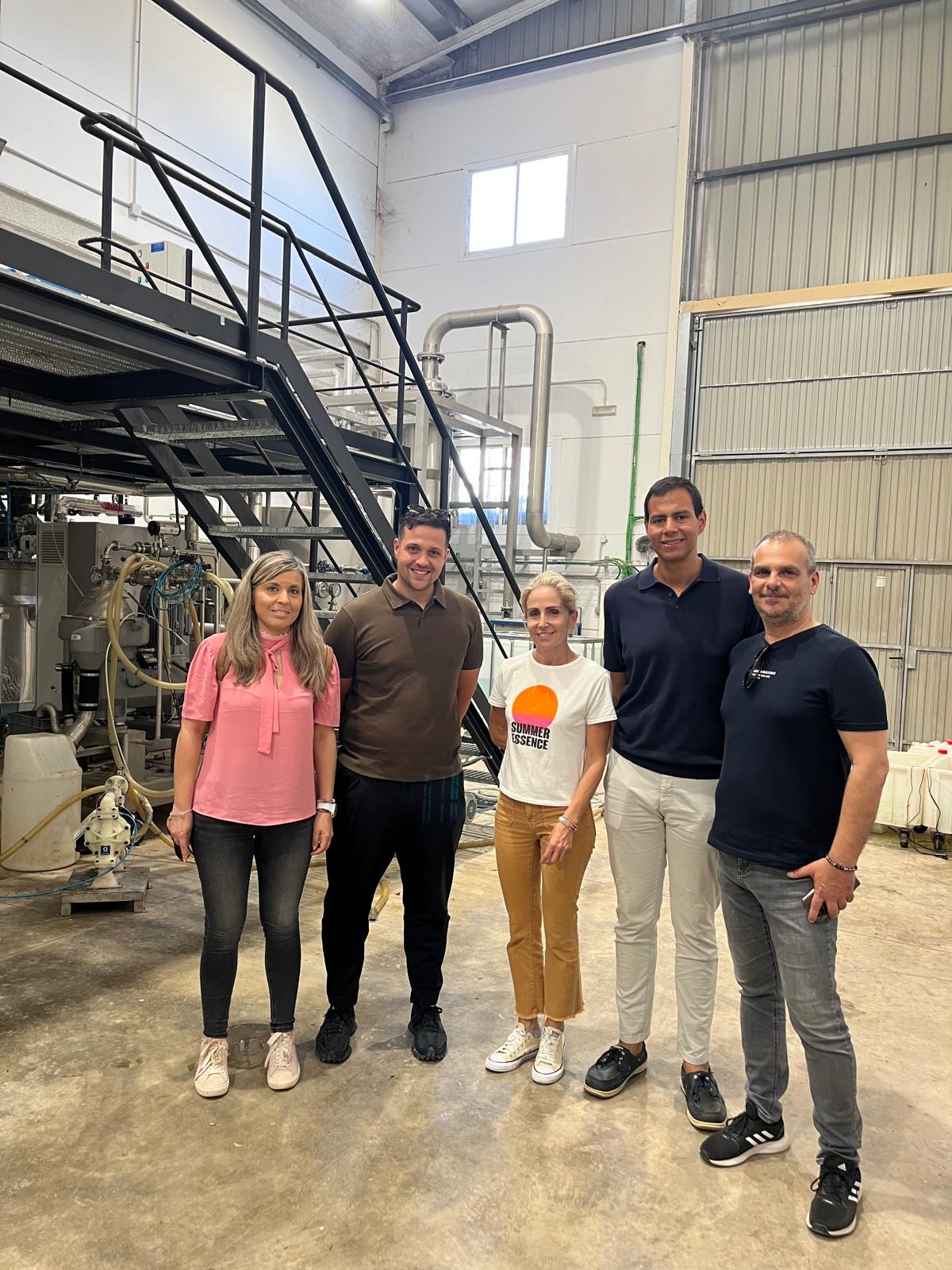
The programme began in Valencia at the facilities of SAV, home to Demo 4. Hosted by Belén Miranda and José María Guijarro, the ELGO team followed the full journey of the experiment’s raw materials, from production through to the first trials already established on site. This provided valuable insight into how the demonstration has been implemented in practice.
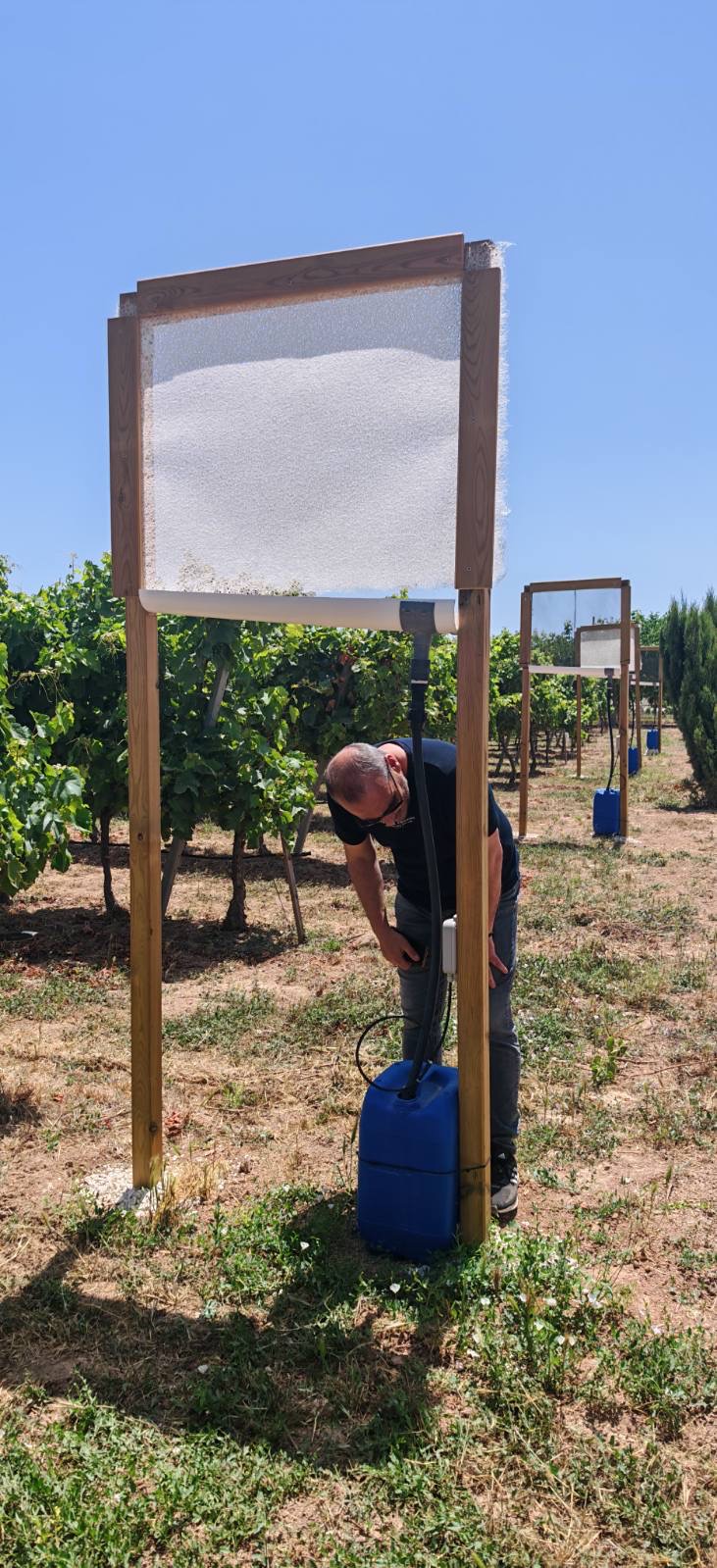
The visit then continued to AVA-ASAJA (Asociación Valenciana de Agricultores), where the fog collectors and biobased nets have now been installed. Accompanied by Jaime Andrés Olea and Celia Sevilla from AIMPLAS, the group examined these complementary solutions: fog collectors designed to harvest atmospheric moisture, and biobased nets that improve soil structure while helping protect it from erosion caused by flooding events.
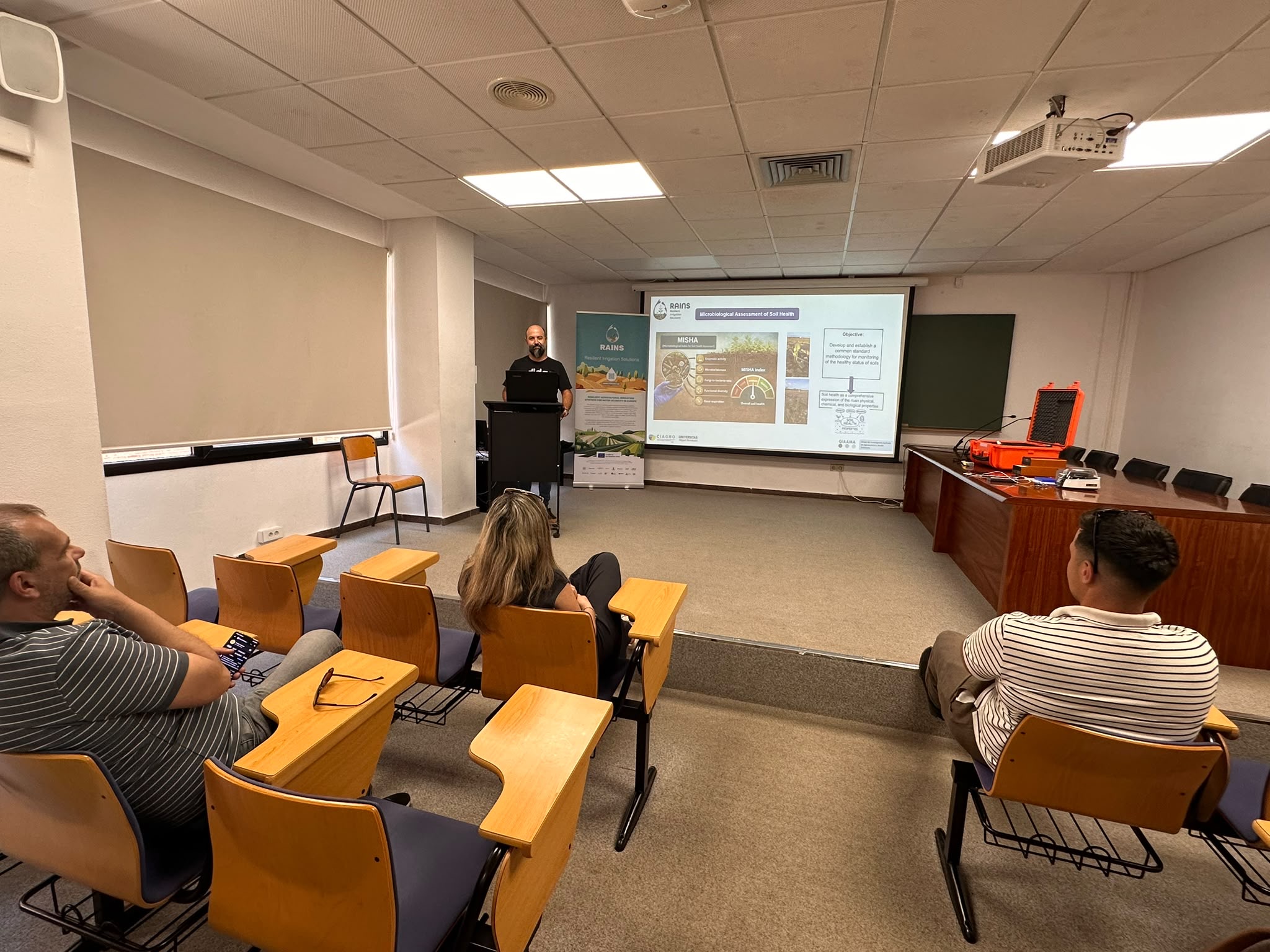
In the following days, the delegation was welcomed at Miguel Hernández University (UMH) in Orihuela, where Raúl Moral Herrero, Javier Andreu Rodríguez and Encarnación Martínez Sabater presented the preparation of compost bricks, the production of biochar, and a range of complementary soil improvement practices. The programme also included a presentation by José Sáez-Tovar on the microbiological assessment of soil health planned for the Spanish demonstration sites. Comparing these methodologies with those already applied in Greece confirmed that both teams are following the same scientific approach, using harmonised measurements and shared analytical methods. The visit concluded with a tour of the university’s laboratories and research facilities.
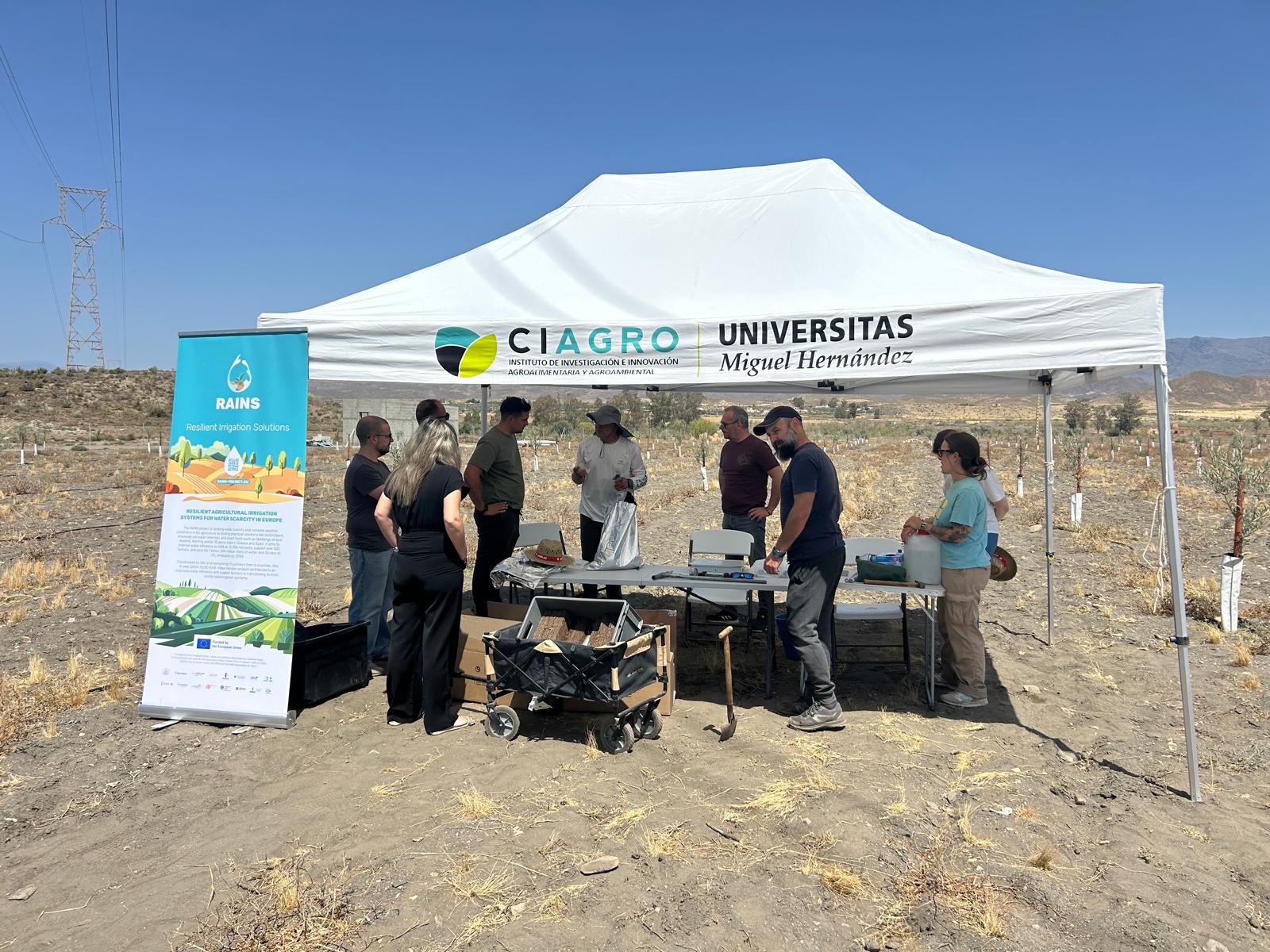
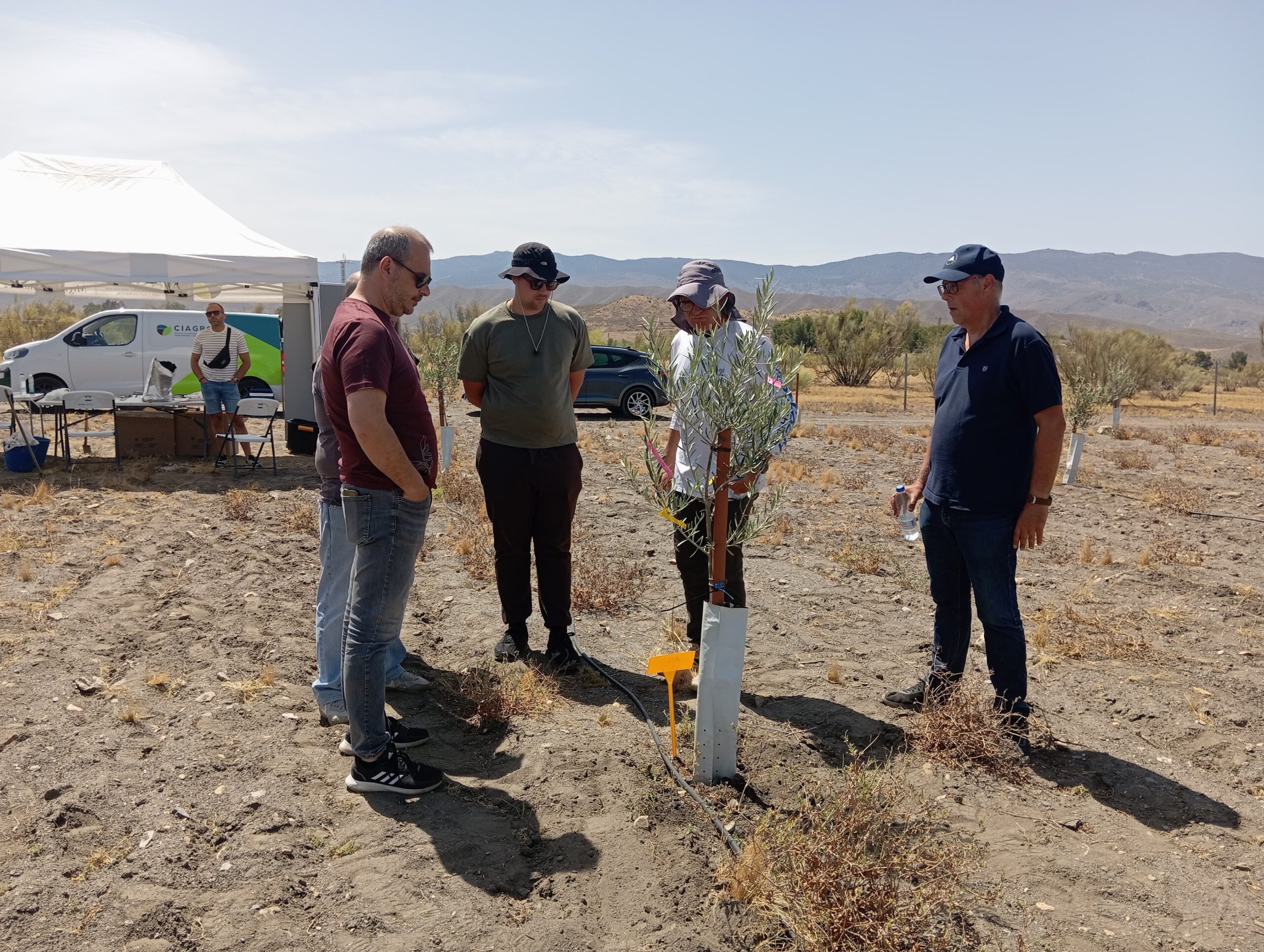
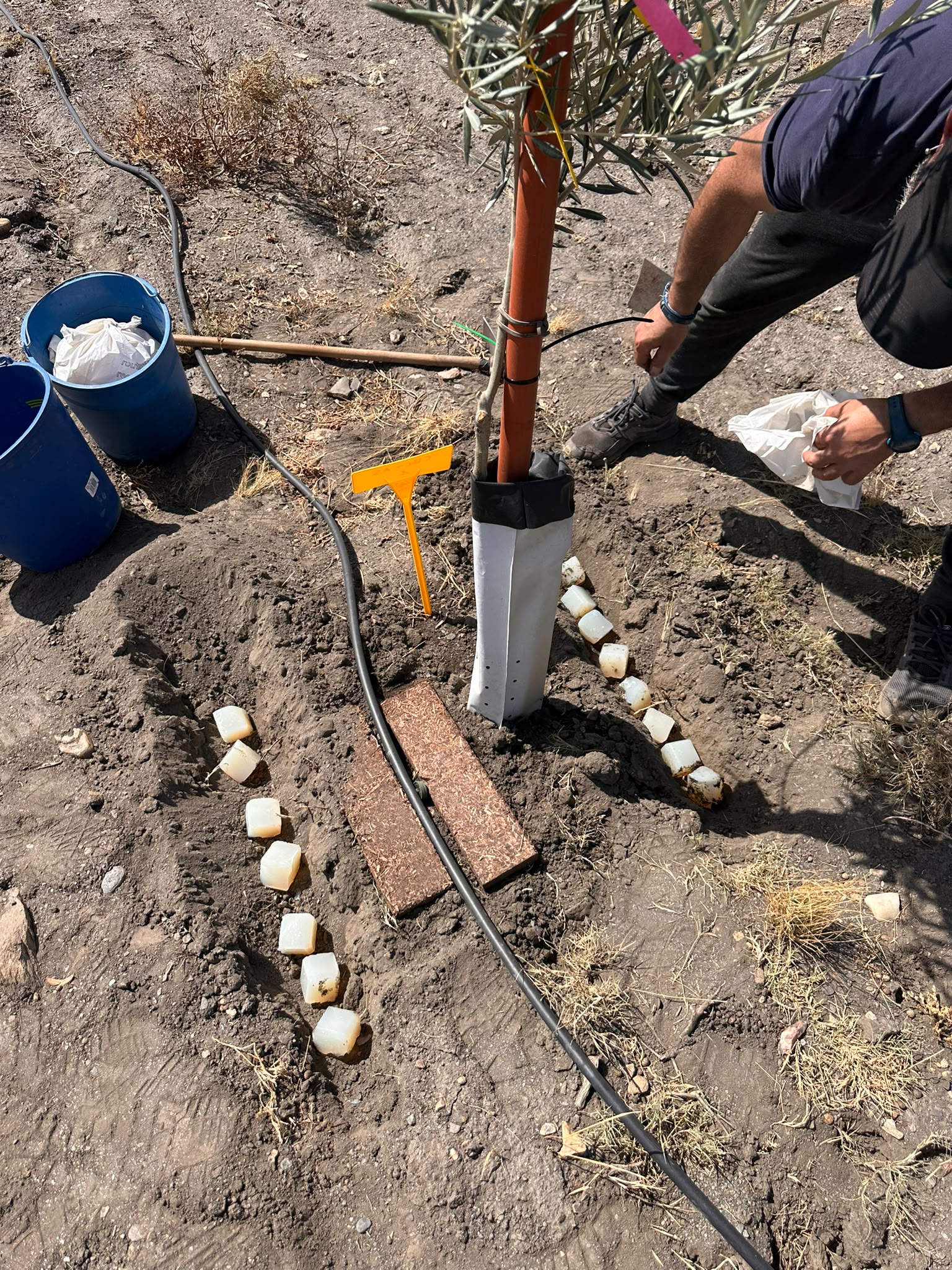
The following day, the UMH team accompanied the ELGO delegation to the pilot site in Almería, where Solid Water and compost brick ladders, as well as their combined application, have been installed. Discussions focused on the correct application methods, the measurements to be recorded, and the protocols to be followed, ensuring that the same procedures can be accurately replicated at the pilot site on Lesvos. The farm manager also provided an overview of the region’s soils, local conditions and the overall timeline of the experimental programme. The visit concluded with a guided tour of the estate’s olive mill, Oro del Desierto (“Gold of the Desert”), providing a fitting end to the exchange between the RAINS partners hosting the project’s pilot sites.
The visit to the Spanish research area further strengthened collaboration between the RAINS partners and provided valuable first-hand insight into the agricultural practices, soils and water challenges of south-eastern Spain, many of which are shared across the Mediterranean basin. By harmonising the microbiological and agronomic measurements across the Greek and Spanish demonstration sites, the consortium has ensured that results from Valencia, Alicante, Almería, Thessaloniki and Lesvos will be directly comparable. Exchanges such as these are central to the RAINS mission, fostering collaboration between science and agricultural practice while supporting the development of more sustainable and climate-resilient farming systems capable of managing water, soil and nutrients more efficiently in a changing climate.